5-AT Trimotor
Ford
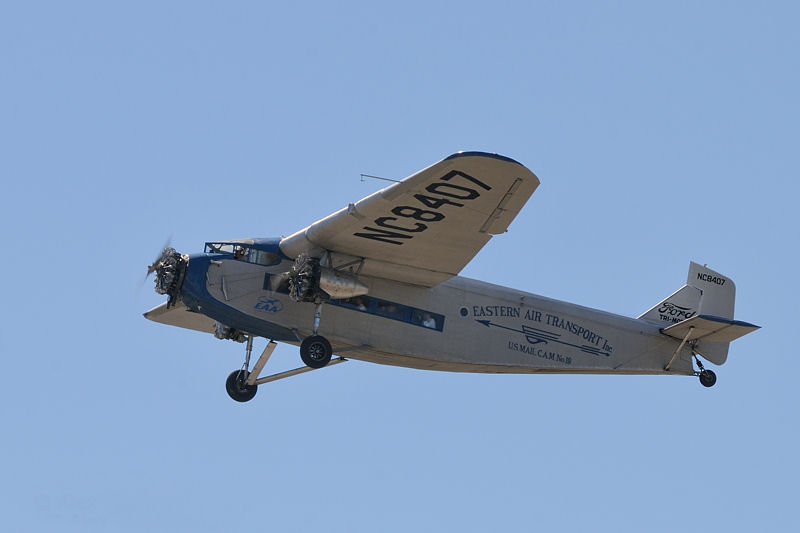
Historical Context & Origins
The late 1920s marked a period of fervent innovation for aviation, with a growing need for reliable and safe aircraft to transport passengers and cargo. Henry Ford, the visionary automotive industrialist, saw the commercial potential of flight, convinced that aviation could replicate the success of the automobile in democratizing transportation.
His ambition was to create a robust and easy-to-maintain aircraft, replicating the principles of series production. This led to the birth of the Trimotor program, culminating in the Ford 5-AT Trimotor model, which made its first flight in 1928, immediately distinguishing itself for its cutting-edge features.
The 5-AT represented a significant step forward from previous models (such as the 4-AT), incorporating improvements in size, power and capacity. The goal was to redefine the concept of commercial flight, making it accessible and, above all, reliable for the general public.
Architecture & Technological Design
The Ford 5-AT Trimotor stood out for its revolutionary all-metal structure, a rarity for the time still dominated by wood and canvas. The corrugated duralumin sheet cladding not only provided exceptional structural rigidity and lightness, but also became its most iconic aesthetic feature, earning it the affectionate nickname "Tin Goose".
The tri-engine configuration, with one engine on the nose cone and two mounted under the wings, was a bold but successful engineering choice, ensuring extraordinary redundancy and safety. This arrangement allowed the plane to continue flying even if one or even two engines failed, instilling confidence in passengers and fledgling airlines.
The cockpit was designed for functionality and serviceability, with a spacious cockpit for the pilots and a passenger cabin that, although initially spartan, was gradually equipped with increasing comforts. Ford's vision was clear: a robust aircraft, easy to repair and designed for regular scheduled service.
Onboard Specifications
- ◆Full metal structure in corrugated duralumin for strength, lightness and easy maintenance.
- ◆Tri-engine configuration with radial engines (often Pratt & Whitney Wasp or Wright Whirlwind) for high reliability and redundancy.
- ◆Enclosed and windowed passenger cabin with seats for up to 11 people, offering unprecedented comfort for commercial flights of the time.
Operational Career & Operators
The Ford 5-AT quickly became the workhorse of the nascent American airlines, playing a crucial role in the creation of the first scheduled routes. Pioneering carriers such as TWA, Pan American Airways, American Airlines and United Air Lines employed it extensively to transport passengers, mail and cargo, helping to establish the reliability of air travel.
In addition to scheduled services, the Trimotor was the protagonist of pioneering flights and expeditions in remote areas, thanks to its robustness and ability to operate from semi-prepared runways. It was used for explorations in Antarctica and Latin America, consolidating its reputation as a versatile and tireless aircraft.
Its exceptional operational longevity saw many examples continue to fly well into the 1960s, and some even beyond, used for charter services, agricultural work or as cargo aircraft. This durability is a testament to the strength of its original design and the quality of its construction.
Legacy & Cultural Impact
The Ford Trimotor is indisputably an icon of pioneering aviation, the symbol of an era in which flight was transitioning from a daring adventure to a reliable, commercial means of transportation. His image is inextricably linked to the collective imagination of the golden age of American civil aviation.
Its success not only paved the way for popular acceptance of air travel, but also influenced subsequent aircraft design, demonstrating the superiority of all-metal construction and the three-engine configuration for passenger safety. It was a catalyst for innovation in the aviation industry.
Even today, several examples of the "Tin Goose" are preserved in museums or are perfectly operational, participating in airshows and historic flights. They continue to enchant audiences, recalling the ingenuity and vision of Henry Ford and the vital role this aircraft played in shaping modern aviation.
Telemetria Specs (HUD)
Hangar Trivia & Curiosità
- 💡Il soprannome 'The Tin Goose' (L'oca di latta) derivava dalla sua struttura in alluminio ondulato, che ricordava quella degli aerei Junkers tedeschi.
- 💡Fu costruito dalla Ford Motor Company; Henry Ford intendeva l'aereo come un'"auto volante" prodotta in serie per rivoluzionare i viaggi e il commercio.
- 💡Un Ford Trimotor, battezzato 'Floyd Bennett', fu utilizzato dall'Ammiraglio Richard E. Byrd per la sua storica spedizione del 1929, che lo rese il primo a sorvolare il Polo Sud.
Archivio Avvistamenti Spotter
Immagini scattate dalla community in tutto il mondo
Vettori Rilevati (Flotta Attiva)

Vettori Rilevati (Flotta Storica / Dismessa)


Northwest Airlines
Stato: Dismesso
American Airlines
Stato: Dismesso
Mexicana de Aviación
Stato: Dismesso
Pan American World Airways
Stato: Dismesso
Cubana de Aviación
Stato: Dismesso
TWA (Trans World Airlines)
Stato: Dismesso
United Airlines
Stato: Dismesso