4-AT Trimotor
Ford
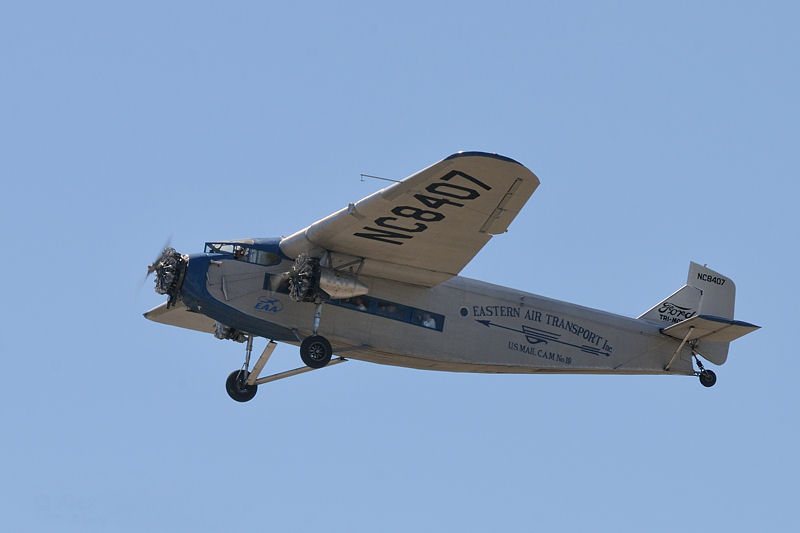
Historical Context & Origins
In the vibrant aviation landscape of the 1920s, the aircraft industry was still in its infancy, dominated by often fragile wood and canvas aircraft. It was in this context that a visionary like Henry Ford, already a pioneer in the automotive industry, turned his attention to the sky, sensing the revolutionary potential of mass air transport. His vision was clear: a robust, reliable and affordable aircraft.
Ford's interest in aviation led him to acquire the Stout Metal Airplane Company, a company with a strong background in building metal aircraft. From this fusion of industrial ambition and technical know-how was born the idea of an aircraft that could overcome the limitations of previous designs, ushering in a new era for commercial aviation. The Ford 4-AT Trimotor, with its first flight in 1926, was the answer.
Architecture & Technological Design
The Ford 4-AT Trimotor immediately stood out for its futuristic architecture and engineering design that guaranteed its robustness and reliability. The most obvious feature was its entirely metallic construction, using corrugated duralumin panels, a material that provided not only resistance but also structural lightness. This approach was heavily influenced by the innovative designs of German engineer Hugo Junkers.
The three-engine configuration represented a crucial innovation for its time, ensuring vital redundancy for safety. With one nose-mounted engine and two cantilevered underwings, the Trimotor could complete a flight even if one of the engines failed, a factor that instilled unprecedented confidence in the public and aircraft operators. Its large windows also offered excellent visibility to passengers, improving the travel experience.
Onboard Specifications
- ◆All-metal Duralumin construction: Provided superior structural strength and greater fire safety compared to wood and canvas aircraft.
- ◆Tri-engine configuration for reliability: Three engines, typically Pratt & Whitney or Wright radials, offered redundant power and increased operational safety, crucial for long-range flights.
- ◆Cantilevered high wing with reinforcing struts: Provided exceptional aerodynamic stability and allowed for a spacious cabin, contributing to passenger comfort.
Operational Career & Operators
Affectionately nicknamed the "Tin Goose" for its distinctive appearance and incredible durability, the Ford Trimotor quickly became the workhorse of the nascent airlines. It carried passengers and mail across the United States, opening new routes and connecting cities with a previously unthinkable regularity. Its ability to operate from poorly prepared runways made it versatile for different geographical conditions.
Pioneering airlines such as Transcontinental Air Transport (TAT) and Pan American World Airways made extensive use of the Trimotor, establishing scheduled services and helping to shape the infrastructure of modern air travel. From fast postal deliveries to the first transcontinental passenger flights, the aircraft proved its reliability on a wide range of missions, including exploratory flights in Antarctica and routes in Latin America.
Legacy & Cultural Impact
The impact of the Ford 4-AT Trimotor on aviation was profound and long-lasting. Not only did it demonstrate the economic feasibility and safety of commercial air travel, but it played a critical role in gaining public confidence in this new form of travel. Its robustness and inherent reliability made it a symbol of progress and innovation during the period between the two world wars.
Today, the Ford Trimotor is remembered as an icon of the golden age of American aviation, a pioneer that paved the way for modern airliners. Restored examples continue to fly on special occasions, offering passengers a nostalgic taste of a bygone era and bearing witness to its advanced engineering. Its unmistakable "voice" and unique profile remain imprinted in aeronautical history, testifying to Henry Ford's vision.
Telemetria Specs (HUD)
Hangar Trivia & Curiosità
- 💡Soprannominato "The Tin Goose" (L'Oca di Latta) per la sua carrozzeria in metallo ondulato, che ricordava gli edifici agricoli dell'epoca.
- 💡Henry Ford, pur essendo un magnate dell'automobile, si avventurò nell'industria aeronautica con il Trimotor, credendo nel suo potenziale per il trasporto di massa.
- 💡Un Ford Trimotor fu utilizzato da Richard E. Byrd nella sua storica spedizione al Polo Sud nel 1929, rendendolo uno dei primi aerei a sorvolare il Polo.
Archivio Avvistamenti Spotter
Immagini scattate dalla community in tutto il mondo
Vettori Rilevati (Flotta Storica / Dismessa)


Northwest Airlines
Stato: Dismesso
American Airlines
Stato: Dismesso
Pan American World Airways
Stato: Dismesso
Cubana de Aviación
Stato: Dismesso
TWA (Trans World Airlines)
Stato: Dismesso
United Airlines
Stato: Dismesso
Stout Air Services
Stato: Dismesso
Mohawk Airlines
Stato: Dismesso