328Jet
Dornier
Historical Context & Origins
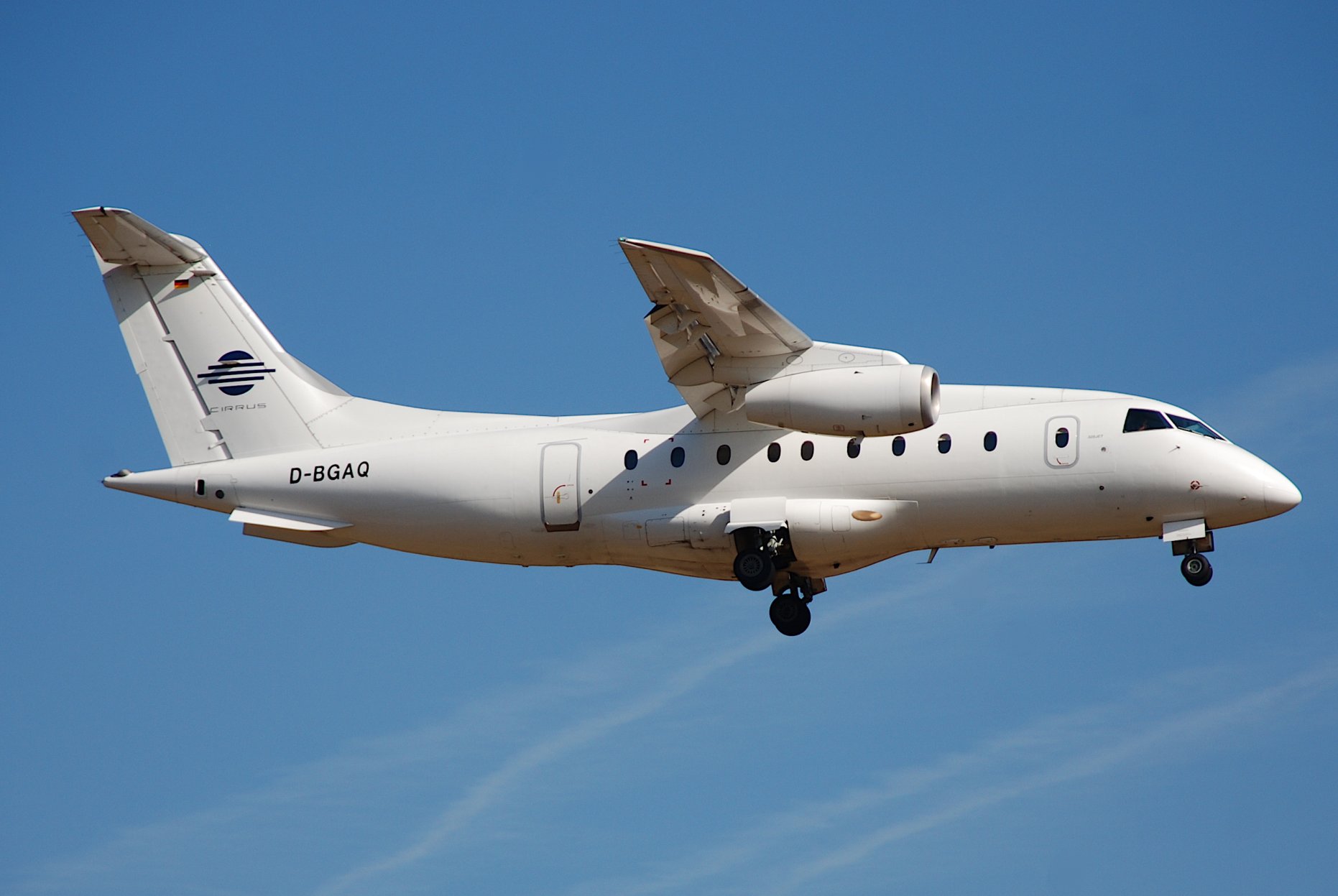
The Dornier 328Jet was born from a solid foundation, that of the Dornier 328 turboprop, a regional aircraft renowned for its exceptional STOL (Short Take-Off and Landing) capabilities and the comfort of its cabin. The evolution towards the jet version was a strategic move to satisfy the growing market demand for a faster and quieter regional aircraft, capable of competing with the new jet competitors.
This transition aimed to combine the reliability and robustness of the original design with the superior performance of jet engines, thus offering an ideal solution for regional routes requiring higher cruising speeds. The project was ambitious, aiming to overcome the perceived limitations of turboprops, particularly regarding noise and speed. Its first flight occurred in 1998, marking a significant moment in German aeronautical engineering.
Architecture & Technological Design
The heart of the Dornier 328Jet's innovation lies in its refined redesign, which retained the excellent fuselage of its predecessor while integrating powerful turbofan engines. Equipped with two Pratt & Whitney Canada PW306B engines, this regional jet reached a cruising speed of approximately 750 km/h (Mach 0.75), significantly higher than the turboprop version, drastically reducing flight times.
The conversion also included significant structural and aerodynamic adaptations to optimize performance with the new engines, while ensuring an exceptionally quiet and vibration-free flying experience for passengers. Its low-wing configuration, inherited from the 328 turboprop, contributed to its stability and notable short takeoff and landing performance, making it extremely versatile.
Despite the modifications, the 328Jet retained Dornier's legendary structural strength, designed to operate from airports with limited infrastructure. This capability, combined with jet-like performance, made it a unique hybrid, particularly attractive to companies that operated on short runways but wanted the speed and comfort of a jet aircraft.
Onboard Specifications
- ◆"Stand-up" cabin with a height of 1.85 m: It offered superior comfort and a feeling of spaciousness unmatched for its category, allowing passengers to move easily inside.
- ◆Optimized Supercritical Wing: Designed to maximize aerodynamic efficiency at high speeds, contributing to reduced fuel consumption and superior cruise performance.
- ◆Honeywell Primus 2000 Avionics: An integrated, advanced system that provided pilots with an intuitive interface and cutting-edge navigation and flight management capabilities.
Operational Career & Operators
Despite its advanced capabilities, the operational career of the Dornier 328Jet was affected by financial turmoil affecting its parent company, Fairchild Dornier. Although it proved its technical worth with an excellent safety and reliability record, its production was limited to just 110 units.
Carriers such as the US Atlantic Coast Airlines and the German Private Wings have appreciated its performance and superior comfort for their passengers, using it on regional routes and for charter flights. It has also found long-lasting use in special roles, including VIP transport, surveillance and medical operations, thanks to its spacious and versatile cabin.
Its operational flexibility and ability to access short runways, whilst maintaining jet-like cruising speeds, have secured the 328Jet a niche in the market. Many examples continue to fly today in various configurations, testifying to the solidity of its original design and its inherent reliability.
Legacy & Cultural Impact
The legacy of the Dornier 328Jet, while not measured in massive sales volumes, lies in its bold engineering vision and its uniqueness as a "STOL high-performance regional jet". It demonstrated that it was possible to combine the agility of a turboprop with the speed and comfort of a jet, creating a superior travel experience for passengers.
It represented a technological bridge, pushing the boundaries of what was expected from a regional aircraft and anticipating some of the features that would later become standard in aircraft of similar size. The 328Jet remains a shining example of German engineering design, celebrated for its precision and attention to detail, despite commercial challenges.
Today, the Dornier 328Jet is admired by aviation enthusiasts for its clean aesthetics and rugged performance. It continues to be a testament to Dornier's innovation and a valuable asset for operators requiring a reliable and versatile aircraft, capable of operating in diverse scenarios.
Telemetria Specs (HUD)
Hangar Trivia & Curiosità
- 💡Only 110 units of the 328Jet were ever manufactured before Fairchild Dornier declared bankruptcy in 2002.
- 💡It is one of the very few regional jets to incorporate a high-wing configuration, a design choice inherited from its turboprop predecessor.
- 💡The 328Jet's cabin is notably wider than many aircraft in its class, allowing for a comfortable 1x2 seating arrangement, which was a key selling point for passenger comfort.
Archivio Avvistamenti Spotter
Immagini scattate dalla community in tutto il mondo
Vettori Rilevati (Flotta Attiva)








Vettori Rilevati (Flotta Storica / Dismessa)


Atlantic Coast Airlines
Stato: Dismesso
Skyway Airlines
Stato: Dismesso
Great Plains Airlines
Stato: Dismesso

Cirrus Airlines
Stato: Dismesso
Lufthansa CityLine
Stato: Dismesso
Welcome Air
Stato: Dismesso

Hainan Airlines
Stato: Dismesso
Tianjin Airlines
Stato: Dismesso