32
Potez
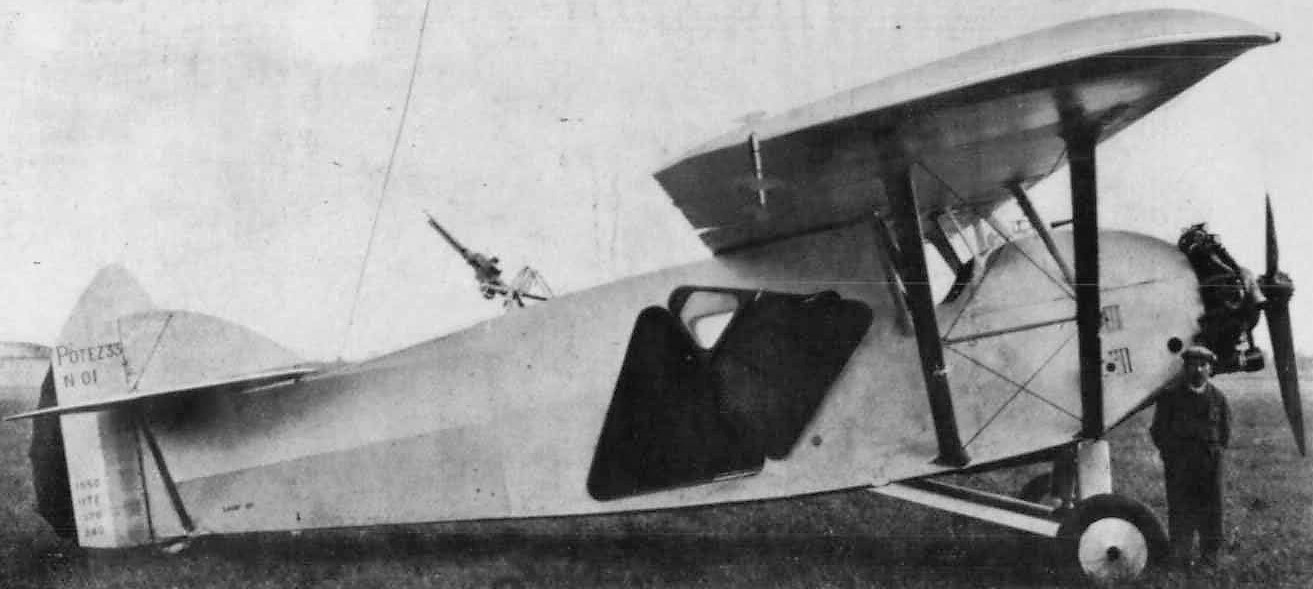
Historical Context & Origins
In the lively aeronautical ferment of the post-war period, the French industry was at the forefront in the design of versatile aircraft, capable of satisfying the growing civil and colonial needs. Henry Potez, a central figure of this period, was notable for his pragmatic vision and ability to produce robust, reliable aircraft. The Potez 32 emerged from this context, conceived to be an air workhorse.
The first flight of the Potez 32, which occurred in 1927, marked the introduction of an aircraft designed for operational efficiency and cost-effectiveness. The goal was to create a multipurpose means of transport, suitable both for the transport of passengers and goods and for liaison or medical roles, especially in the vast communication networks of the French colonies in Africa and the Middle East. It was an era of aerial exploration and route consolidation.
Architecture & Technological Design
The Potez 32 was presented as a high-wing monoplane, a configuration that guaranteed excellent stability and good visibility for pilots and passengers. This design choice, combined with a fixed and robust landing gear, made it particularly suitable for operating from improvised airfields and unprepared runways, a frequent necessity in remote regions.
Its construction reflected the best practices of the time: a mixed structure with a wooden wing and fuselage made of welded steel tubes, covered in canvas. This combination ensured an ideal compromise between lightness, structural strength and ease of maintenance, crucial aspects for an aircraft destined for long periods of service in often demanding conditions.
The beating heart of the Potez 32 was its engine, usually a 450 hp Lorraine 7Aa 7-cylinder radial or a Salmson 9Ac, known for its reliability and ability to operate effectively in different climates. Its power guaranteed adequate performance for the transport of significant loads, while maintaining reasonable consumption, essential for long journeys without refueling.
Onboard Specifications
- ◆Enclosed cabin for passengers and cargo: A significant step forward in comfort and protection from the elements.
- ◆Fast conversion capability: Allowed the aircraft to be transformed from a passenger transport to a cargo or ambulance in a short time.
- ◆Superior structural strength: Designed to withstand the stresses of landing on rough terrain and adverse weather conditions.
Operational Career & Operators
The Potez 32 found its main vocation as a civil transport aircraft, used intensively by French airlines who were expanding their networks. Airlines such as Air Union and, later, Air France, used it to establish and consolidate key routes, particularly those heading to colonies in North Africa and the Middle East.
Its reliability and cargo capacity made it an essential carrier for air mail and for the transport of a limited number of passengers, often pioneers of transcontinental air travel. Operating in extreme conditions, from desert heat to high altitudes, the Potez 32 earned a reputation as a tireless worker.
Although he is not associated with spectacular record-breaking feats, his career was dotted with countless service flights, which contributed significantly to the development of French commercial aviation. It was a true "pack mule" of the air, fundamental for logistics and communication between the homeland and overseas territories.
Legacy & Cultural Impact
Although not as famous as other aircraft of the time, the Potez 32 left an indelible mark on the evolution of air transport. It demonstrated the economic and operational feasibility of a high-wing monoplane aircraft for civilian purposes, influencing subsequent designs and strengthening confidence in aviation as a practical and reliable means of transportation.
Its emphasis on versatility and robustness set a precedent for the requirements of aircraft intended to operate in difficult geographical environments. The Potez 32 helped shape expectations for passenger comfort and speed of interior reconfiguration, aspects that would become standard in modern commercial aviation.
In summary, the Potez 32 is more than just a piece of aeronautical history; it is a symbol of the pragmatic engineering and perseverance that allowed aviation to overcome its early stages. Its quiet but crucial contribution to the connectivity and development of commercial air routes makes it an emblematic example of the golden era of aviation.
Telemetria Specs (HUD)
Hangar Trivia & Curiosità
- 💡Progettato da Louis Coroller, era specificamente destinato a rotte coloniali impegnative, privilegiando l'affidabilità e la facilità di manutenzione rispetto alle prestazioni estreme.
- 💡Molti Potez 32 furono impiegati dalle compagnie aeree coloniali francesi, in particolare nel Nord Africa e nel Levante, contribuendo significativamente ai primi servizi di posta aerea.
- 💡Nonostante il numero limitato di esemplari prodotti (circa 20-30), il Potez 32 svolse un ruolo pionieristico nel dimostrare la fattibilità del trasporto aereo civile in regioni remote.
Archivio Avvistamenti Spotter
Immagini scattate dalla community in tutto il mondo