314 Clipper
Boeing
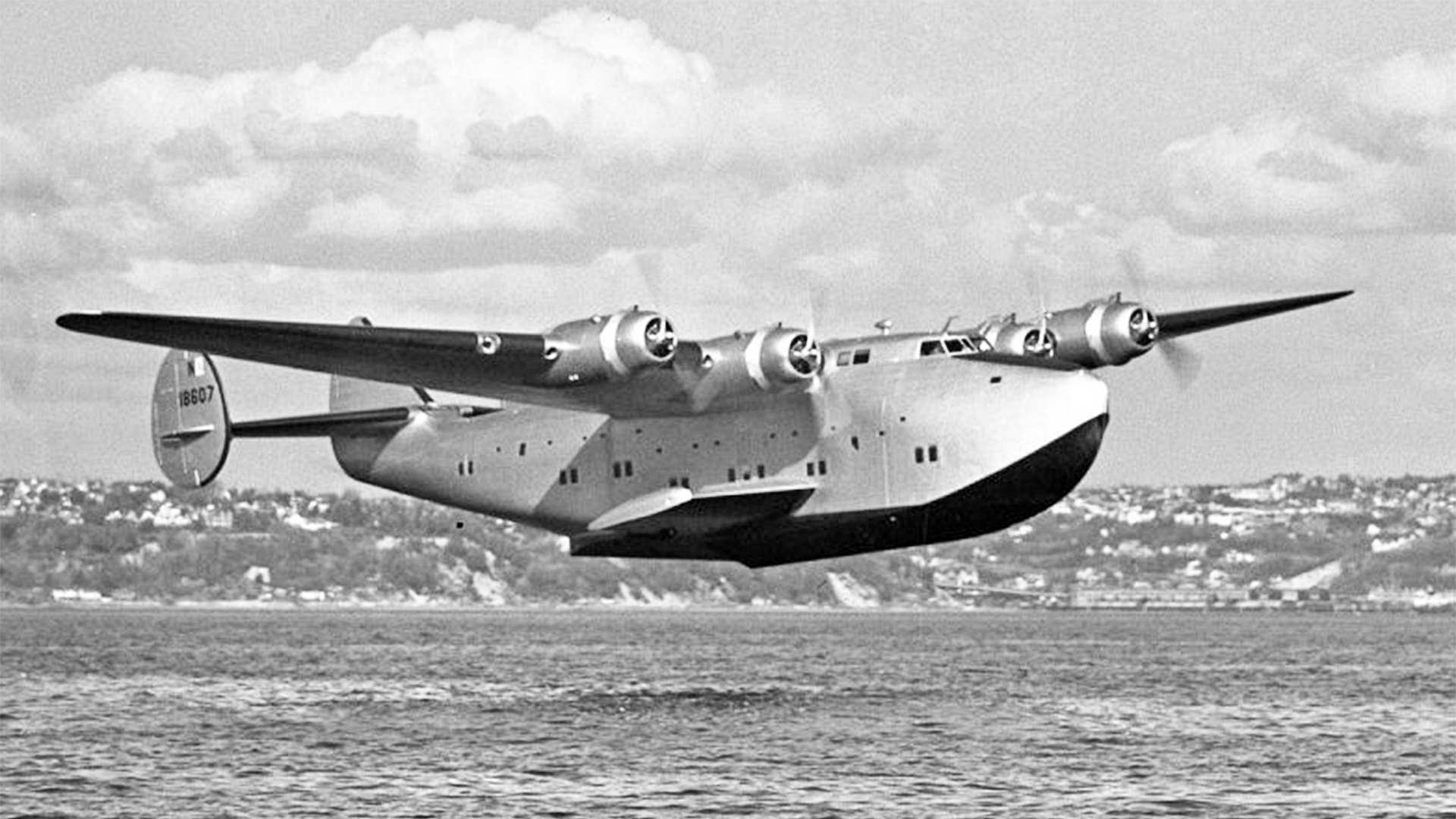
Historical Context & Origins
In the late 1930s, technological advancement and the growing demand for intercontinental connections pushed airlines to explore new frontiers. In this context of innovative fervor, Pan American World Airways (Pan Am), under the vision of its founder Juan Trippe, sought an aircraft capable of connecting continents with unprecedented luxury and range.
The need was clear: a giant seaplane that could cover the vast distances of the Atlantic and Pacific, turning air travel into a classy experience. The challenge was launched to various manufacturers, but it was Boeing that presented the most ambitious and promising project, destined to become a legend.
The result was the Boeing 314 Clipper, a marvel of engineering and comfort that first flew in 1938. This giant of the skies epitomized the golden age of aviation, promising to shorten the world in a way never before imagined.
Architecture & Technological Design
The Boeing 314 was a true colossus of its time, a hulled seaplane of impressive dimensions, designed specifically for long transoceanic routes. Its architecture featured a high wing, supported by massive stabilizer floats that also served as additional fuel tanks, a major engineering innovation.
Propulsion was entrusted to four Wright R-2600 Twin Cyclone radial engines, powerful engines that delivered as many as 1,600 horsepower each. This configuration ensured not only the thrust necessary for heavy takeoffs from water, but also crucial reliability for passages of more than 4,000 nautical miles.
The Clipper's interiors were designed to maximize passenger comfort on flights that could last several days. It was not just a means of transportation, but a "flying hotel" equipped with every luxury, redefining the concept of premium air travel.
Onboard Specifications
- ◆Luxurious sleeping cabins and common areas: It offered a real dining room, lounges and comfortable berths to rest on long journeys.
- ◆Transoceanic flight range: Thanks to immense fuel tanks and efficient engines, it could cover extreme distances without stopping.
- ◆Advanced navigation system for its time: Equipped with beacons, sextants and the best instruments available, essential for navigation on vast oceans.
Operational Career & Operators
The Boeing 314's operational career began with great fanfare, with Pan American World Airways deploying it on its prestigious routes. It was the first aircraft to offer regular passenger service across the Atlantic and Pacific Oceans, connecting cities such as New York, Lisbon, San Francisco and Auckland.
With the outbreak of World War II, the Clippers were quickly requisitioned by the US military. Despite their luxury, they transformed into vital means of transport for VIP personnel, diplomats and strategic cargo, carrying out crucial missions to every corner of the globe.
Total production was limited to just 12 examples, each christened with iconic names. These marine giants remained in service for a relatively short period, as the advancement of post-war long-range land-based aircraft led to their gradual decommissioning by the end of the 1940s.
Legacy & Cultural Impact
The Boeing 314 Clipper was not just an airplane; it was a symbol of human audacity and faith in progress. He embodied the golden age of flight, a time when air travel was a grandiose and almost mystical event, accessible to a privileged few.
His presence had a huge cultural impact, fueling the collective imagination and appearing in films and novels as an icon of glamor and adventure. It demonstrated the feasibility and desirability of global air travel, paving the way for modern commercial aviation.
Although no examples have survived to the present day, the legacy of the Boeing 314 Clipper is indelible. It laid the foundation for the development of ever larger and more comfortable long-range aircraft, proving that the skies were no longer a border, but a new highway for humanity.
Telemetria Specs (HUD)
Hangar Trivia & Curiosità
- 💡Often called 'flying hotels,' the Clippers featured lavish amenities like dining rooms, sleeping compartments, and dressing rooms, providing a luxury experience akin to ocean liners.
- 💡During World War II, several Clippers were impressed into military service, famously transporting high-ranking officials, including Winston Churchill, across the Atlantic.
- 💡Only twelve Boeing 314s were ever built, and sadly, none survive today; the last operational Clipper was scrapped in 1946.
Archivio Avvistamenti Spotter
Immagini scattate dalla community in tutto il mondo