228-200
Dornier
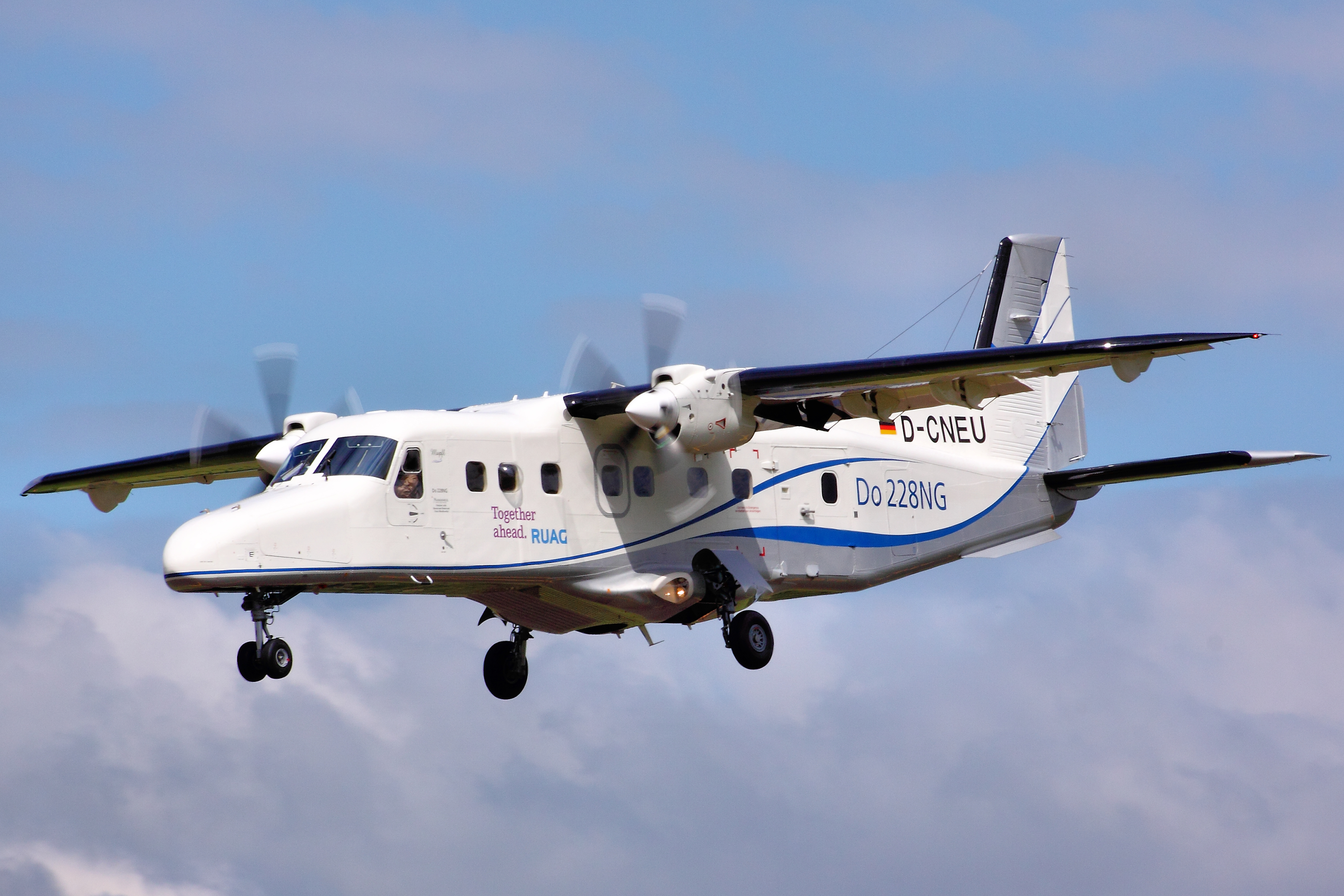
Historical Context & Origins
In the early 1980s, the aviation industry sought extremely versatile regional and utility aircraft, capable of operating from short, unprepared runways. Dornier, on the strength of its engineering reputation, responded with the ambitious project of the Dornier 228, focusing on operational robustness and low costs.
The Dornier 228 made its first flight in 1981, presenting itself as an innovative solution. It immediately distinguished itself with a design philosophy focused on reliability, ease of maintenance and excellent performance in complex operating conditions, ensuring its success and longevity.
Architecture & Technological Design
The distinctive feature of the Dornier 228, in particular the -200 version, is its revolutionary wing: the Tragflügel neuer Technologie (TNT). This aerodynamically optimized supercritical wing provided superior lift and reduced drag, enabling exceptional STOL performance and remarkable flight efficiency.
The rectangular non-pressurised fuselage of the Dornier 228-200 maximized usable space for passengers or cargo, highlighting a pragmatic approach. Powered by two Pratt & Whitney Canada PT6A-65B turboprops, it offered extraordinary load capacity and autonomy. Robust structure and simple design ensured high reliability and low maintenance.
Onboard Specifications
- ◆TNT Supercritical Wing: Provides exceptional STOL (Short Take-Off and Landing) capabilities and superior aerodynamic efficiency, reducing runway requirements and fuel consumption.
- ◆High Strength Aluminum Alloy Structure: Designed to operate in harsh environments, it offers structural durability and extended service life with minimal need for heavy maintenance.
- ◆Integrated Avionics System: Cutting-edge for its time, it provided pilots with better situational awareness and made the aircraft suitable for complex operations in different climatic conditions.
Operational Career & Operators
The Dornier 228-200 quickly established itself as an irreplaceable multipurpose aircraft. It has successfully operated in regional passenger transport, maritime reconnaissance, military logistics support and scientific missions, connecting remote locations thanks to its STOL capabilities.
Numerous regional airlines, militaries and government agencies around the world have chosen the Dornier 228. Its versatility and operational reliability have made it a pillar for access to limited airport infrastructures, becoming synonymous with robustness in different scenarios.
Legacy & Cultural Impact
The legacy of the Dornier 228 is significant, standing as an enduring example of cutting-edge German aeronautical engineering. Its production, continued by RUAG Aerospace and now by General Atomics Europe, testifies to the intrinsic validity of the project and its continued relevance in the market.
Even today, the Dornier 228-200 is active globally in a variety of roles, demonstrating enviable operational longevity. It has become an icon of reliability and versatility in utility and regional aviation, influencing the design of similar aircraft and maintaining a vital role in many industries.
Telemetria Specs (HUD)
Hangar Trivia & Curiosità
- 💡Originariamente sviluppato da Dornier GmbH, la sua produzione è stata concessa in licenza a Hindustan Aeronautics Limited (HAL) in India e continua oggi con versioni modernizzate da General Atomics Europe (ex RUAG).
- 💡L'aereo incorpora un'innovativa ala 'Tragflügel Neuer Technologie' (TNT), un design a profilo supercritico che ottimizza l'efficienza aerodinamica, migliorando significativamente le sue prestazioni STOL.
- 💡Nonostante il primo volo nel 1981, il design duraturo e l'adattabilità del Dornier 228 gli consentono di rimanere in produzione e in servizio attivo a livello globale in vari ruoli, inclusa la moderna serie Dornier 228 NG.
Archivio Avvistamenti Spotter
Immagini scattate dalla community in tutto il mondo