2-0-2
Martin
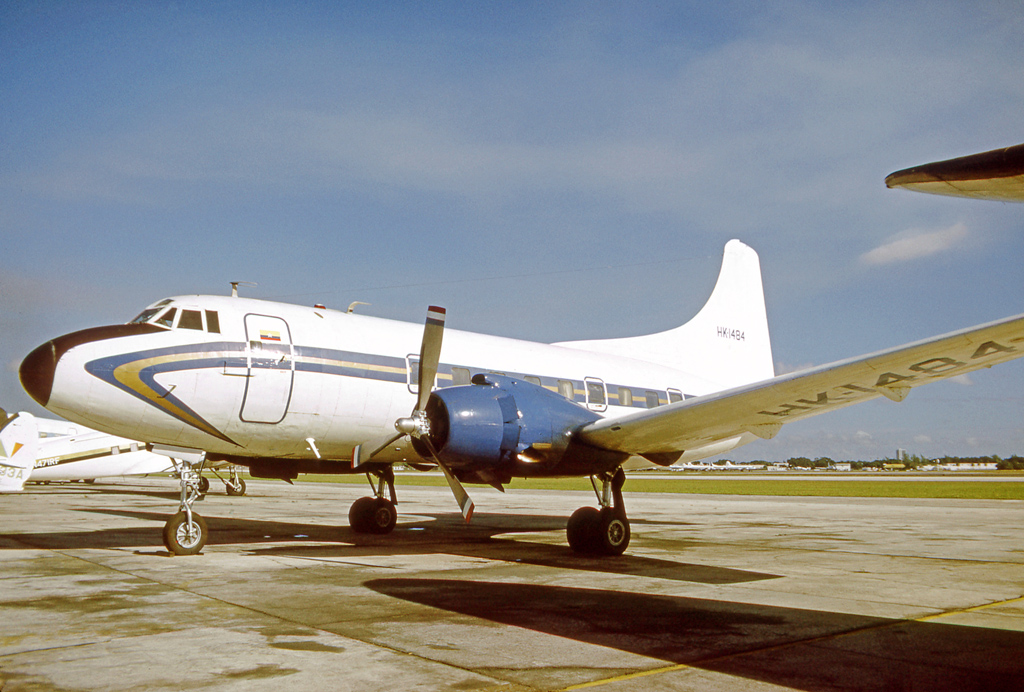
Historical Context & Origins
The immediate post-war period saw civil aviation in turmoil, with growing demand for passenger aircraft that exceeded the capabilities of the venerable, but now obsolete, Douglas DC-3. Airlines needed faster, more comfortable and economical aircraft for regional and short-haul routes. In this scenario of renewal, the Glenn L. Martin Company, famous for its military bombers, decided to launch itself into the civilian market.
The Martin 2-0-2 was conceived as a direct successor to the DC-3, promising superior performance and optimized operating costs. The project aimed to offer a modern and agile aircraft, capable of facilitating rapid turnarounds and ensuring an improved travel experience for passengers. Its first flight was in 1947, marking Martin's entry into a highly competitive industry.
Architecture & Technological Design
The 2-0-2 presented itself as an elegant low-wing twin-engine monoplane, entirely built of metal, with a configuration that embodied the modernity of the time. It was designed to typically accommodate 36-40 passengers, in a more spacious and bright cabin than its predecessors. Its sturdy structure and engineering approach made it an example of solid post-war American construction.
A distinctive feature, and at the same time a limitation, was its unpressurized cabin. Sebbene ciò riducesse la complessità e il peso, rendendolo adatto a voli a bassa quota, rappresentò uno svantaggio competitivo rispetto a velivoli coevi come il Convair 240, che offriva il comfort dell'altitudine in cabina. The design, however, focused on efficiency and simplified maintenance for line operations.
Onboard Specifications
- ◆Pratt & Whitney R-2800 Double Wasp radial engines: Provided impressive power and proven reliability.
- ◆Reversible pitch propellers: Allowed for shorter landings and greater maneuverability on the ground.
- ◆Integrated passenger ladder (Airstair): An innovative solution that accelerated boarding and disembarking, reducing dwell times.
Operational Career & Operators
The Martin 2-0-2 entered service in 1947 with prestige carriers such as Eastern Air Lines and Northwest Airlines. Initially, it was greeted with enthusiasm for its speed and modern features. However, its career was soon marked by significant challenges, including stiff competition from the Convair 240, which offered cabin pressurization, something increasingly requested by passengers.
Una serie di incidenti iniziali, alcuni dei quali correlati a problemi strutturali alle ali, portò a una temporanea messa a terra e a costose modifiche, che ne minarono la reputazione e la fiducia delle compagnie aeree. Although the problems were resolved, the damage was done. Production amounted to only 47 units, a relatively low number which limited its diffusion.
Legacy & Cultural Impact
Despite its limited production and operational difficulties, the Martin 2-0-2 holds a significant place in aviation history. He was a pioneer in demonstrating the growing demand for post-war regional airliners, and his innovations, such as the integrated ladder, influenced the design of future aircraft.
The 2-0-2 represents an eloquent example of the challenges and rapid technological evolutions that characterized the aeronautical industry after the Second World War. His experience helped shape the requirements for the next generation of short- to medium-range aircraft, laying the foundation for more successful models that would take up its legacy, such as the later Martin 4-0-4 (pressurized) and the turboprops that would dominate the industry.
Telemetria Specs (HUD)
Hangar Trivia & Curiosità
- 💡It was the first American twin-engine airliner designed and flown after World War II, specifically targeting the commercial short-haul market.
- 💡The '0' in its designation is often said to signify its unpressurized cabin, a feature later addressed with the introduction of the pressurized Martin 4-0-4.
- 💡The early structural issues with the 2-0-2 played a significant role in highlighting the importance of 'fail-safe' design principles in commercial aviation, influencing future aircraft development.
Archivio Avvistamenti Spotter
Immagini scattate dalla community in tutto il mondo