170 Freighter
Bristol
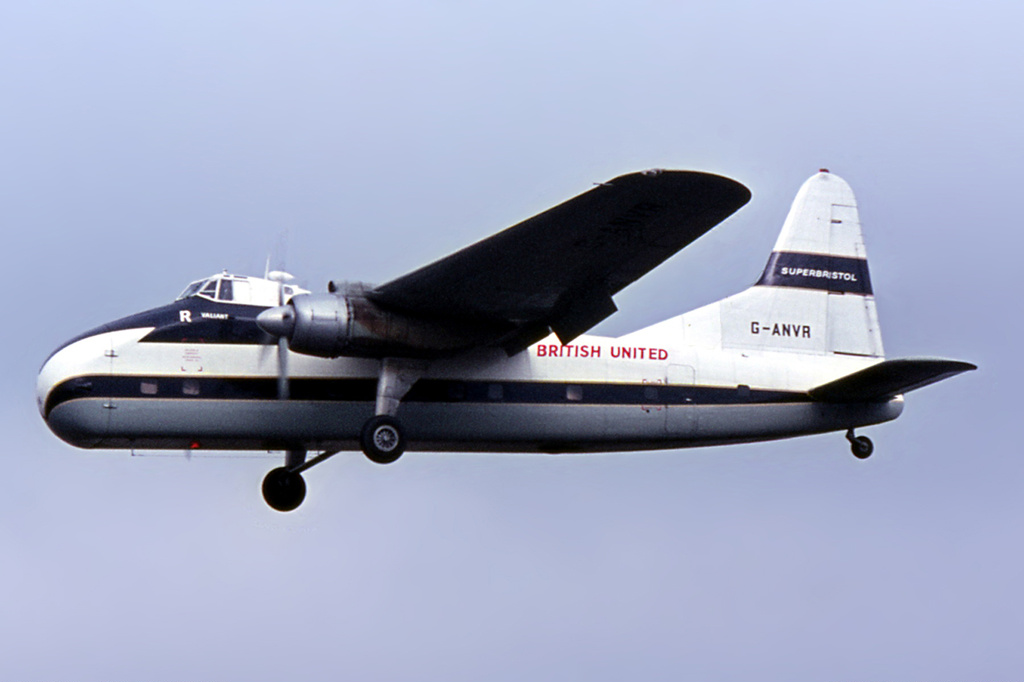
Historical Context & Origins
The Bristol Type 170 Freighter, which first flew in 1945, emerged from a pressing post-war need. With the end of the Second World War, Europe found itself having to rebuild its infrastructure and trade, requiring a robust and versatile transport aircraft capable of operating from poorly prepared runways.
The Bristol Airplane Company responded to this challenge with an innovative design, initially conceived to meet the British Air Ministry's specification 2/44. The objective was an economical and easy to maintain twin-engine aircraft, suitable for both cargo and passenger transport on short and medium range routes.
The project evolved rapidly, creating an air "packhorse" that would redefine the concept of civil and military air transport, laying the foundations for future evolutions in the specialized air cargo sector.
Architecture & Technological Design
The Bristol 170 Freighter sported a distinctive architecture, featuring a high-wing monoplane configuration and robust fixed tricycle landing gear. Its unmistakable silhouette was dominated by the bulky, boxy fuselage, designed to maximize payload space.
The propulsion heart of the Freighter was made up of two Bristol Hercules 734/735 radial engines, famous for their reliability and power. These engines, coupled with three-bladed propellers, guaranteed the ability to lift considerable loads and operate in different environmental conditions, a fundamental requirement for the time.
Its most revolutionary feature was the opening "clamshell" nose, which allowed direct and unprecedented frontal access to the load compartment. This engineering solution greatly simplified the loading and unloading of bulky goods and even vehicles, making it a pioneer of its kind.
Onboard Specifications
- ◆Opening clamshell nose: Fundamental innovation for the rapid loading and unloading of bulky goods, including vehicles.
- ◆Robust all-metal structure: Guaranteed durability and ability to operate from less equipped airports, with grass or dirt runways.
- ◆Bristol Hercules radial engines: Chosen for their proven reliability and power, essential for load performance and operational efficiency.
Operational Career & Operators
The Bristol Freighter enjoyed an exceptionally long and diverse operational career, serving both air forces and civilian companies around the world. It entered service with the Royal Air Force (RAF) and other air forces, proving its usefulness in logistics transport missions.
In the civilian sphere, its impact was revolutionary. Companies such as Silver City Airways and Channel Air Bridge used it with great success to transport cars and passengers across the Channel, establishing the first true air "car ferry" service in history. This innovation transformed cross-border travel.
In addition to the transport of vehicles, the Freighter was used for the most disparate tasks: from the transport of livestock and general goods, to the support of Arctic explorations, up to humanitarian missions. Its versatility and reliability made it an invaluable asset for over fifty years of active service.
Legacy & Cultural Impact
The Bristol 170 Freighter has left an indelible legacy in the history of aviation, serving as a true pioneer in the air cargo industry. It demonstrated the feasibility and profitability of dedicated cargo aircraft, paving the way for future developments in transport aircraft design.
Its ability to load vehicles directly through the nose inspired subsequent concepts and accelerated the modernization of aviation logistics. Although it was not the fastest or most elegant, its pragmatism and operational efficiency made it an icon of post-war British engineering.
Today, few examples of the Bristol Freighter survive in museums and private collections, reflecting an era when robustness and functionality were priorities. Its story represents a fascinating chapter in the evolution of aviation, a symbol of the human ability to innovate to overcome the challenges of our time.
Telemetria Specs (HUD)
Hangar Trivia & Curiosità
- 💡It was one of the first aircraft specifically designed to carry vehicles, featuring its unique hinged nose for direct front loading.
- 💡A dedicated passenger version, without the reinforced floor or nose loading capability, was known as the Bristol Wayfarer.
- 💡The Freighter gained iconic status operating 'air ferry' services, allowing passengers to fly their cars across short distances, like the English Channel.
Archivio Avvistamenti Spotter
Immagini scattate dalla community in tutto il mondo
Vettori Rilevati (Flotta Storica / Dismessa)


British United Air Ferries
Stato: Dismesso

Aer Lingus
Stato: Dismesso
British European Airways
Stato: Dismesso

Trans Australia Airlines
Stato: Dismesso
Sabena
Stato: Dismesso

Iberia
Stato: Dismesso
Associated Aviation
Stato: Dismesso