777-300ER
Boeing
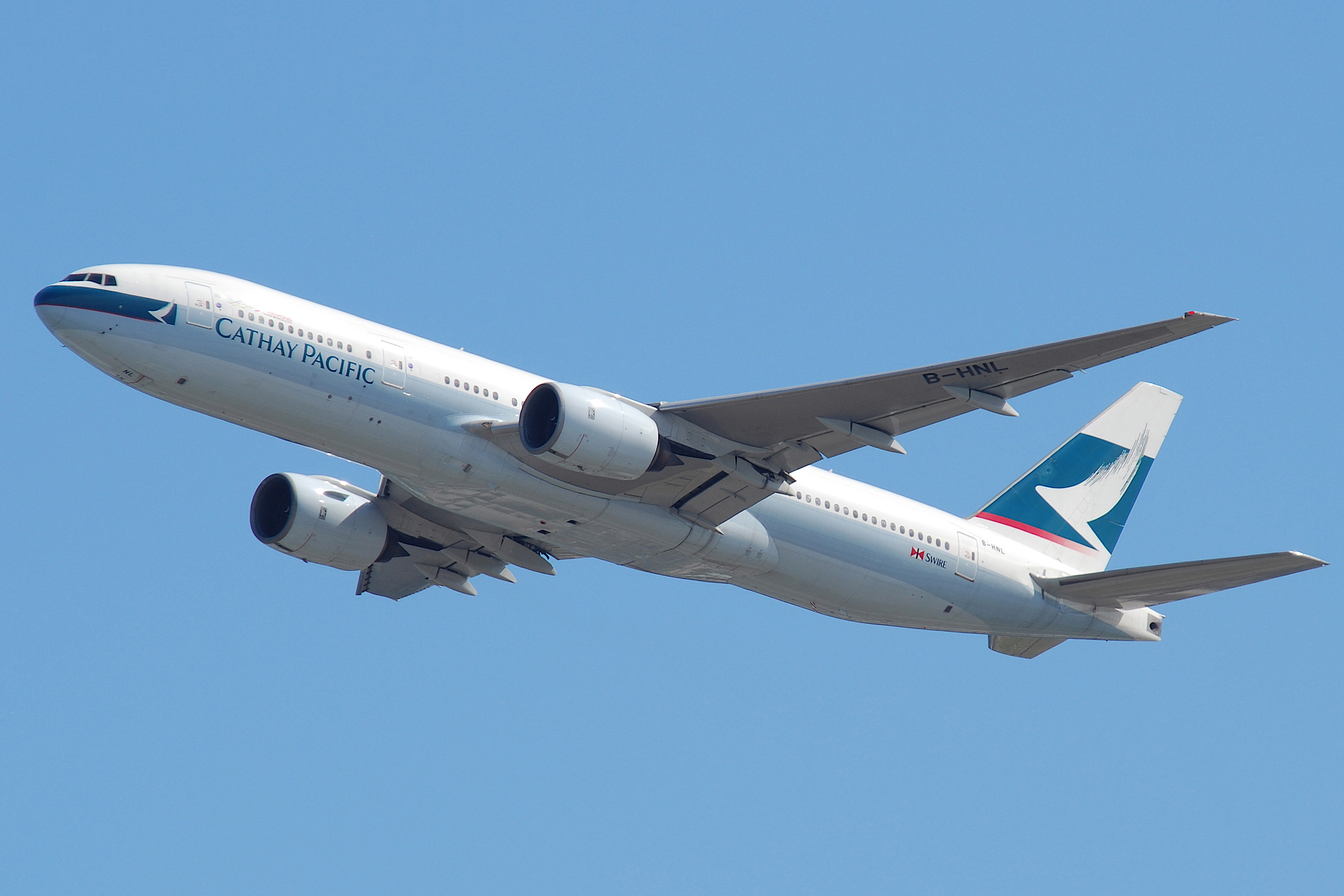
Contexte Historique & Origines
Le Boeing 777, surnommé « Triple Seven », était un projet ambitieux dès sa conception dans les années 1990, créé pour combler l'écart entre le 767 et le 747. Le succès de la série originale a poussé Boeing à explorer des versions encore plus performantes et à long rayon d'action, répondant à la demande croissante de liaisons directes entre des villes lointaines, sans avoir besoin d'avions quadrimoteurs plus chers et moins efficaces.
C'est dans ce contexte qu'émerge le Boeing 777-300ER (Extended Range), une évolution du déjà impressionnant 777-300. Ce géant bimoteur n'était pas seulement un allongement du fuselage, mais une refonte significative conçue pour dominer les routes transcontinentales et transocéaniques, tirant pleinement parti des certifications ETOPS (Extended-range Twin-engine Operational Performance Standards).
Le 24 février 2003 a marqué son premier vol, ouvrant la voie à une nouvelle ère pour le transport aérien long-courrier. Grâce à son extraordinaire combinaison de capacité, d'efficacité et d'autonomie, le 777-300ER s'est rapidement positionné comme le successeur idéal des anciens Boeing 747 et MD-11, promettant des coûts d'exploitation considérablement réduits.
Architecture & Conception Technologique
L'architecture du 777-300ER représente le summum de l'ingénierie aéronautique, alliant innovation et fiabilité. Au cœur de sa capacité à long rayon d'action se trouvent les moteurs General Electric GE90-115B, les plus puissants jamais installés sur un avion commercial au moment de leur introduction. Ces géants sont la clé de l’autonomie étendue et des performances extraordinaires de l’avion.
Outre la propulsion, la cellule a subi d'importantes modifications. Les ailes ont été allongées et équipées de bouts d'ailes inclinés, optimisés pour améliorer l'efficacité aérodynamique et réduire la consommation de carburant sur de longues distances. Le train d'atterrissage a été renforcé pour s'adapter à l'augmentation de la masse au décollage, avec une intégration innovante d'une troisième paire de roues sur le train d'atterrissage principal central.
La conception du cockpit entièrement numérique fly-by-wire offre aux pilotes un contrôle précis et une gestion avancée des systèmes de vol, reflétant l'engagement de Boeing en faveur de la sécurité et de l'efficacité. Le fuselage allongé, avec ses 73,9 mètres, maximise la capacité de transport de passagers et de fret, ce qui en fait un véritable cheval de bataille du ciel.
Spécifications de Bord
- ◆Moteurs General Electric GE90-115B : Avec une poussée impressionnante de 115 300 lb (environ 513 kN) par moteur, ils détiennent le record de puissance pour un moteur d'avion commercial.
- ◆Capacité de carburant accrue : Le 777-300ER peut transporter jusqu'à 195 000 litres de carburant, offrant une autonomie de plus de 14 500 km.
- ◆Structure renforcée et bouts d'ailes inclinés : améliore la portance, réduit la traînée induite et augmente le rendement énergétique, essentiel pour les opérations à longue distance.
Carrière Opérationnelle & Opérateurs
Depuis son introduction, le Boeing 777-300ER a conquis le marché mondial, devenant l'épine dorsale de nombreuses compagnies aériennes parmi les plus prestigieuses au monde sur les routes internationales. Des transporteurs tels que Emirates, Cathay Pacific, Qatar Airways, British Airways et Air France l'ont adopté en grand nombre, reconnaissant son équilibre inégalé entre capacité, rayon d'action et coûts d'exploitation.
Sa fiabilité et sa capacité à exploiter des itinéraires longs et fins avec un seul arrêt en ont fait un « changement de donne ». Il a permis l'ouverture de nouvelles routes directes, comme des liaisons sans escale entre l'Amérique du Nord et l'Asie ou l'Europe et l'Australie, transformant la carte du ciel et réduisant les temps de trajet de millions de passagers.
Non seulement pour les passagers, mais aussi pour le transport de marchandises, le 777-300ER offre des capacités importantes. Sa polyvalence, combinée à une excellente réputation en matière de confort cabine et d’expérience à bord, a consolidé sa position comme l’un des avions long-courriers les plus populaires et les plus performants de l’histoire de l’aviation commerciale.
Héritage & Impact Culturel
Le Boeing 777-300ER n’est pas seulement un avion ; c'est une icône qui a redéfini les attentes de l'aviation à long rayon d'action. Il a démontré sans équivoque que les avions bimoteurs pouvaient non seulement égaler, mais même dépasser les performances et l'efficacité des avions quadrimoteurs sur les trajets les plus longs, établissant ainsi une nouvelle norme pour la conception d'avions gros-porteurs.
Son influence s’étend bien au-delà de la simple performance technique. Elle a façonné la façon dont les gens voyagent, rendant des destinations auparavant difficiles d’accès plus accessibles et plus pratiques. Sa présence est une constante dans les grands aéroports mondiaux, symbole de connectivité mondiale et de progrès technologique.
L'héritage du 777-300ER est celui d'un pionnier. Il a été le pionnier d'une nouvelle génération d'avions bimoteurs à long rayon d'action, influençant directement le développement d'avions tels que le Boeing 787 Dreamliner et l'Airbus A350, qui poursuivent sa vision de l'efficacité et de l'autonomie. Il reste un pilier irremplaçable du transport aérien moderne, un véritable chef-d’œuvre d’ingénierie et de design.
Telemetria Specs (HUD)
Hangar Trivia & Curiosità
- 💡Le 777-300ER était le plus grand avion biréacteur du monde jusqu'à l'introduction de la série 777X.
- 💡Il détient une certification ETOPS-330, lui permettant de voler jusqu'à 330 minutes de l'aéroport de déroutement le plus proche sur un seul moteur.
- 💡Ses moteurs GE90-115B sont les moteurs à réaction commerciaux les plus puissants jamais produits, avec un diamètre de soufflante plus grand que le diamètre du fuselage d'un Boeing 737.
Archivio Avvistamenti Spotter
Immagini scattate dalla community in tutto il mondo
Vettori Rilevati (Flotta Attiva)

China Airlines
In Flotta: x10 u.
Biman Bangladesh Airlines
In Flotta: x4 u.

Turkish Airlines
In Flotta: x33 u.

Swiss International Air Lines
In Flotta: x12 u.

American Airlines
In Flotta: x20 u.
EVA Air
In Flotta: x13 u.

Emirates
In Flotta: x133 u.

China Southern Airlines
In Flotta: x10 u.

Air France
In Flotta: x43 u.
Etihad Airways
In Flotta: x19 u.
Ethiopian Airlines
In Flotta: x6 u.
Oman Air
In Flotta: x6 u.
Kenya Airways
In Flotta: x3 u.

Qatar Airways
In Flotta: x57 u.
Hainan Airlines
In Flotta: x10 u.
Thai Airways
In Flotta: x17 u.
Aeroflot
In Flotta: x17 u.

British Airways
In Flotta: x16 u.
Garuda Indonesia
In Flotta: x10 u.
Philippine Airlines
In Flotta: x10 u.
Korean Air
In Flotta: x26 u.
Air India
In Flotta: x13 u.
United Airlines
In Flotta: x22 u.

Saudia
In Flotta: x35 u.

KLM Royal Dutch Airlines
In Flotta: x16 u.
TAAG Angola Airlines
In Flotta: x3 u.
El Al
In Flotta: x6 u.

Singapore Airlines
In Flotta: x27 u.

Japan Airlines
In Flotta: x13 u.

LATAM Airlines Brasil
In Flotta: x10 u.
All Nippon Airways
In Flotta: x15 u.
Air China
In Flotta: x28 u.