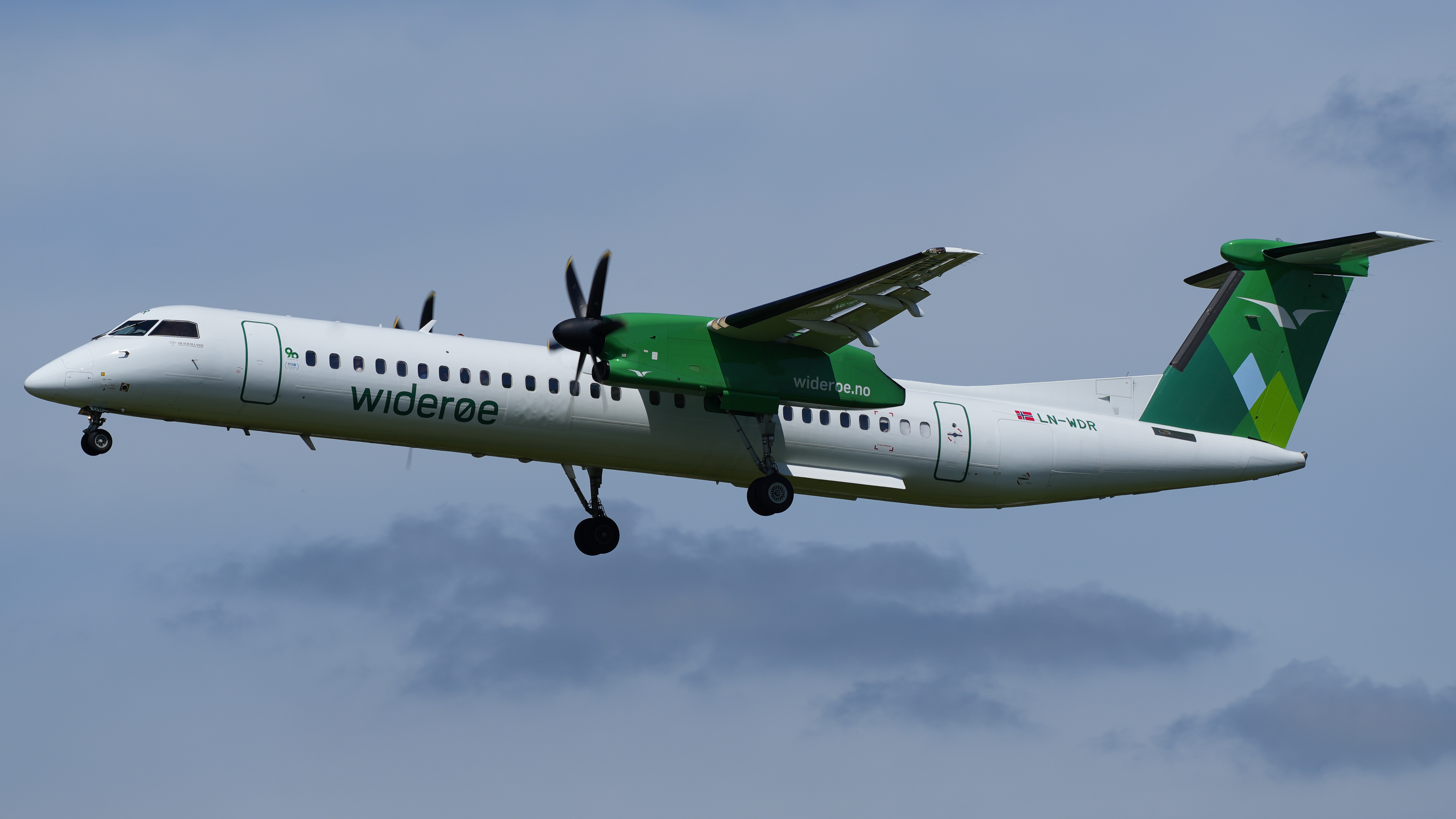
DHC-8-300
de Havilland Canada
Historischer Kontext & Ursprünge
Die de Havilland Canada DHC-8, besser bekannt als Dash 8, ist seit ihrer Konzeption ein Meilenstein in der regionalen Luftfahrt. Erste Varianten wie -100 und -200 wurden entwickelt, um den Anforderungen von Kurzstreckenstrecken effizient und zuverlässig gerecht zu werden, und etablierten sich dank ihrer robusten Leistung und der Fähigkeit, auf kurzen Landebahnen zu operieren, schnell als Branchenführer.
Die wachsende Nachfrage nach größerer Passagierkapazität und Reichweite, ohne die bewährten Betriebseigenschaften der Serie zu beeinträchtigen, veranlasste de Havilland Canada, eine größere Version zu entwickeln. Diese Entwicklung führte zur Geburt des DHC-8-300, eines Flugzeugs, das die Standards des regionalen Luftverkehrs weiter neu definieren soll.
Der DHC-8-300 absolvierte seinen Erstflug im Jahr 1989 und markierte damit den Beginn eines neuen Kapitels für die Dash 8-Familie. Dieses Modell nutzte den Erfolg seiner Vorgänger und führte erhebliche Verbesserungen ein, die seine Attraktivität und Vielseitigkeit auf dem Weltmarkt steigerten und sich als optimale Lösung für den Mittelstreckentransport positionierten.
Architektur & Technologisches Design
Die Architektur des DHC-8-300 ist ein meisterhaftes Beispiel angewandter Luftfahrttechnik. Seine Besonderheit liegt im verlängerten Rumpf, der im Vergleich zur -100 gut 3,43 Meter länger ist und die Passagierkapazität auf maximal 50-56 Sitzplätze erhöht. Diese volumetrische Vergrößerung wurde integriert, während die außergewöhnliche Aerodynamik und die kurze Start- und Landeleistung (STOL) der Dash 8-Familie erhalten blieben.
Das Herzstück seiner Leistung sind die leistungsstarken Pratt & Whitney Canada PW123B Turboprop-Triebwerke, die jeweils 2.500 PS leisten können. Diese Motoren bieten in Kombination mit hocheffizienten sechsblättrigen Dowty-Propellern eine hervorragende Kombination aus Reisegeschwindigkeit von etwa 520 km/h (280 Knoten), Kraftstoffeffizienz und geringem Lärm, was für den Regionalbetrieb und die Passagierzufriedenheit von entscheidender Bedeutung ist.
Eine der bedeutendsten Innovationen, die mit dem -300 eingeführt und dann auf andere „Q“-Varianten (Quiet) ausgeweitet wurden, ist das ANVS-System (Active Noise and Vibration Suppression). Diese revolutionäre Technologie überwacht aktiv Vibrationen und Kabinengeräusche, neutralisiert sie mit gegenphasigen Schallwellen und sorgt so für einen deutlich höheren akustischen Komfort als herkömmliche Turboprops.
Bordspezifikationen
- ◆Verlängerter Rumpf für mehr Passagierkapazität (bis zu 56)
- ◆ANVS-System (Active Noise and Vibration Suppression) für überragenden akustischen Komfort
- ◆Pratt & Whitney Canada PW123B 2.500 PS-Motoren für Leistung und Effizienz
Operative Karriere & Fluggesellschaften
Der DHC-8-300 festigte schnell seinen Ruf als Arbeitstier bei zahlreichen Regionalfluggesellschaften auf der ganzen Welt. Seine Robustheit, Zuverlässigkeit und seine Fähigkeit, unter unterschiedlichen Klima- und Infrastrukturbedingungen, einschließlich unvorbereiteter Start- und Landebahnen oder Flughäfen mit Lärmbeschränkungen, effektiv zu funktionieren, haben es bei Betreibern äußerst beliebt gemacht.
Fluggesellschaften wie Porter Airlines, Air Canada Jazz, QantasLink und Flybe sind nur einige Beispiele von Betreibern, die beim Aufbau ihrer regionalen Netzwerke auf die Dash 8-300 vertraut haben und Gemeinden und Städte mit effizienten und bequemen Flügen verbinden. Aufgrund seiner Vielseitigkeit wurde es in einem breiten Spektrum von Aufgaben eingesetzt, vom planmäßigen Personentransport bis hin zu Spezialfrachtdiensten, und bewies dabei eine bemerkenswerte Anpassungsfähigkeit.
Seine große Reichweite von bis zu 1.530 km und die für einen Turboprop konkurrenzfähige Reisegeschwindigkeit machen ihn ideal für Strecken über 500-600 Kilometer, die mittlere Städte und große Drehkreuze verbinden. Die bewährte Betriebssicherheit und die niedrigen Betriebskosten waren Schlüsselfaktoren für den anhaltenden weltweiten kommerziellen Erfolg.
Erbe & Kultureller Einfluss
Das Erbe des DHC-8-300 in der regionalen Luftfahrtlandschaft ist unbestreitbar und tiefgreifend. Es zeigte überzeugend, dass Turboprop-Flugzeuge ein komfortables und leises Reiseerlebnis bieten können, und räumte mit Mythen über den für ältere Modelle typischen Lärm und Vibrationen auf. Sein Einfluss ist in der Entwicklung nachfolgender Turboprop-Generationen deutlich sichtbar.
Der Erfolg des -300 ebnete den Weg für weitere Innovationen innerhalb der Dash 8-Familie und gipfelte im größeren und schnelleren Q400. Dies festigte die Position von Bombardier (das de Havilland Canada übernommen hat) als unangefochtener Marktführer im regionalen Turboprop-Segment, eine Rolle, in der die DHC-8-300 eine wesentliche und bahnbrechende Rolle spielte.
Auch heute noch werden viele DHC-8-300 in verschiedenen Teilen der Welt aktiv geflogen, ein Beweis für ihre außergewöhnliche Haltbarkeit und ihr zukunftsorientiertes Design. Es ist ein Symbol dafür, wie die kanadische Ingenieurskunst auf die Herausforderungen des regionalen Luftverkehrs reagiert und einen unauslöschlichen Eindruck in der Geschichte der kommerziellen Luftfahrt und der Wahrnehmung des Turboprop-Reisens hinterlassen hat.
Telemetria Specs (HUD)
Hangar Trivia & Curiosità
- 💡È spesso indicato come 'Q300', dove la 'Q' sta per l'incorporazione di un sistema attivo di soppressione del rumore e delle vibrazioni (ANVS), che rende la sua cabina notevolmente più silenziosa.
- 💡Il DHC-8-300 fu originariamente prodotto da de Havilland Canada, poi da Bombardier Aerospace, e ora è prodotto da De Havilland Aircraft of Canada Limited (DHC).
- 💡Il suo primo volo nel 1989 lo rese un significativo aggiornamento in termini di capacità e prestazioni all'interno della serie di successo Dash 8 di turboelica regionali.
Archivio Avvistamenti Spotter
Immagini scattate dalla community in tutto il mondo
Vettori Rilevati (Flotta Attiva)


Air Dolomiti
In Flotta: x12 u.

Air Creebec
In Flotta: x2 u.
Perimeter Aviation
In Flotta: x16 u.
Widerøe
In Flotta: x15 u.
Air New Zealand
In Flotta: x6 u.
Jazz Air
In Flotta: x10 u.
Central Mountain Air
In Flotta: x9 u.

CommuteAir
In Flotta: x15 u.
Voyageur Airways
In Flotta: x4 u.Vettori Rilevati (Flotta Storica / Dismessa)

R1 Airlines
Stato: Dismesso

ANA Wings
Stato: Dismesso

Hamburg Airlines
Stato: Dismesso
PAL Airlines
Stato: Dismesso
BWIA West Indies Airways
Stato: Dismesso
Tyrolean Airways
Stato: Dismesso

Flybe
Stato: Dismesso
Dutch Caribbean Airlines
Stato: Dismesso
Piedmont Airlines
Stato: Dismesso
Eastern Airways
Stato: Dismesso