DC-6
Douglas
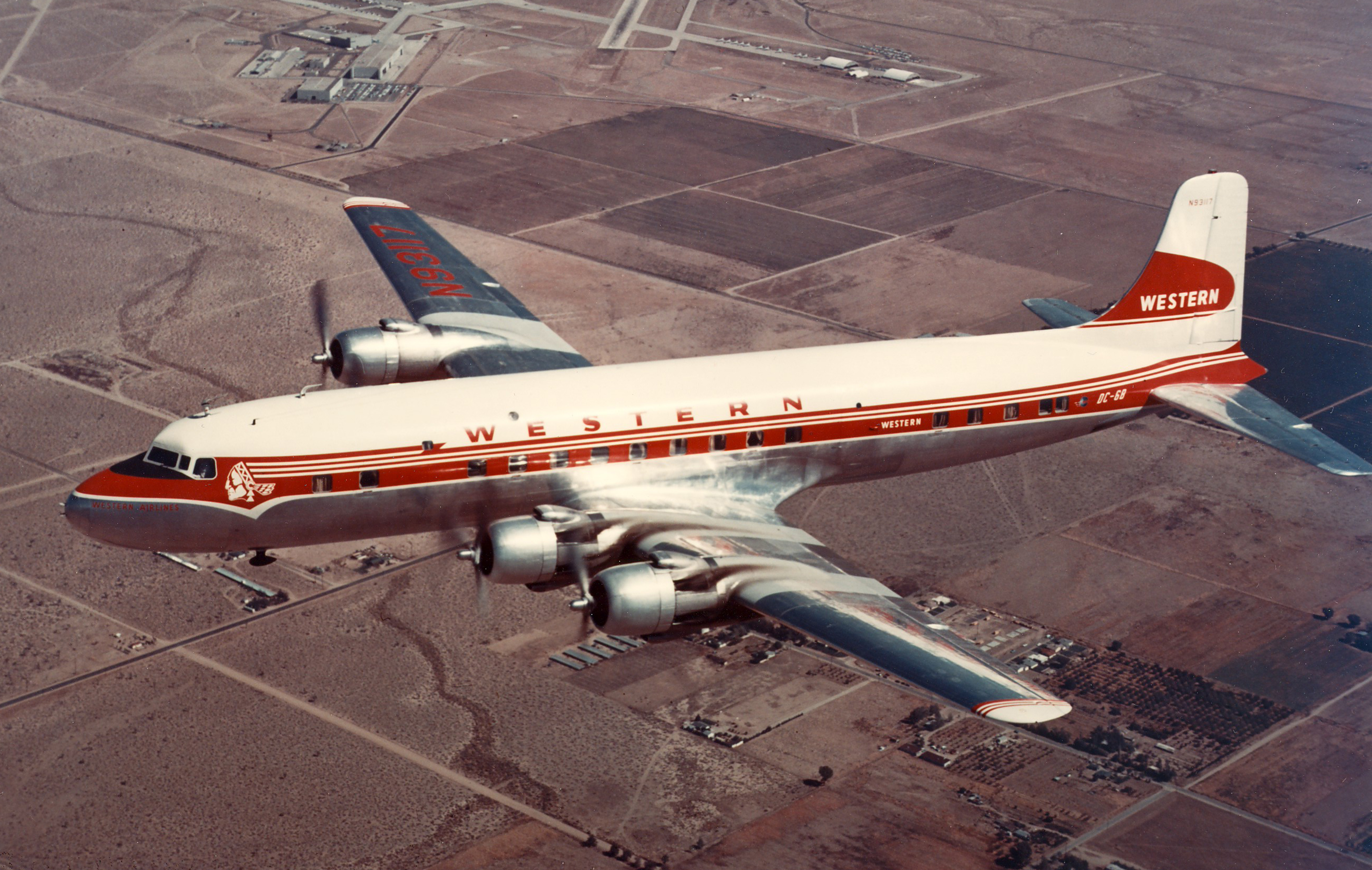
Historischer Kontext & Ursprünge
Das Epos der Douglas DC-6 beginnt in der turbulenten Zeit unmittelbar nach dem Zweiten Weltkrieg, als die globale Zivilluftfahrt für einen beispiellosen Qualitätssprung bereit war. Dank des Erfolgs der DC-3 und DC-4 spürte die Douglas Aircraft Company die wachsende Nachfrage nach schnelleren, komfortableren und leistungsfähigeren Flugzeugen für Langstreckenflüge.
Ursprünglich als C-118 Liftmaster als militärisches Langstreckentransportflugzeug konzipiert, wurde das Projekt schnell auf die Bedürfnisse des zivilen Marktes umgestellt. Die Fluggesellschaften benötigten Flugzeuge, die den Passagieren ein erstklassiges Reiseerlebnis bieten und dabei die Einschränkungen früherer Modelle überwinden konnten. Die Douglas DC-6 antwortete auf diesen Ruf mit einer technischen Meisterleistung, die die Standards ihrer Zeit neu definieren würde.
Sein Erstflug fand 1946 statt und markierte den Beginn einer legendären Karriere, die sich über Jahrzehnte erstrecken sollte. Die DC-6 wurde als direkte Weiterentwicklung der DC-4 vorgeschlagen, jedoch mit wesentlichen Verbesserungen, die sie zu einer der Säulen der propellergetriebenen Luftfahrt der Nachkriegszeit machen würden.
Architektur & Technologisches Design
Die Architektur der Douglas DC-6 war ein Triumph der Luftfahrttechnik, die auf maximale Effizienz, Komfort und Sicherheit ausgelegt war. Seine Flugzeugzelle, länger und robuster als die des Vorgängers DC-4, beherbergte eine für die damalige Zeit revolutionäre Innovation: die Druckkabine. Diese Innovation ermöglichte das Fliegen in größeren Höhen, wo die Luft stabiler ist, Turbulenzen reduziert wurden und eine deutlich angenehmere Reise für die Passagiere gewährleistet wurde.
Das Flugzeug wurde von vier Sternmotoren vom Typ Pratt & Whitney R-2800 Double Wasp angetrieben, eine Entscheidung, die auf deren bewährter Zuverlässigkeit und Leistung beruhte. Diese Motoren, die jeweils etwa 2.200 PS leisten können, verliehen der DC-6 eine außergewöhnliche Leistung für ein Propellerflugzeug und ermöglichten eine Reisegeschwindigkeit von 507 km/h und eine beeindruckende Reichweite von fast 4.800 km.
Das Design umfasste auch aerodynamische und strukturelle Verbesserungen, die darauf abzielten, die Festigkeit und Langlebigkeit des Flugzeugs zu erhöhen, Merkmale, die zu seiner außergewöhnlichen operativen Karriere beitragen würden. Auf jedes Detail wurde geachtet, um ein optimales Gleichgewicht zwischen Leistung, Komfort und Sicherheit zu bieten, was ihn zu einem wahren technologischen Juwel seiner Zeit machte.
Bordspezifikationen
- ◆Druckkabine: Für komfortablere Flüge in großen Höhen, wodurch die Ermüdung von Passagieren und Besatzung verringert wird.
- ◆Pratt & Whitney R-2800 Double Wasp Sternmotoren: Vier Triebwerke mit jeweils 2.200 PS, ein Synonym für Leistung und Zuverlässigkeit im Langstreckenflug.
- ◆Heißluft-Abgabesystem: Entscheidende Innovation für die Betriebssicherheit bei widrigen Wetterbedingungen und Gewährleistung der Wartung der Flügeloberflächen.
Operative Karriere & Fluggesellschaften
Die Douglas DC-6 wurde schnell bei den renommiertesten Fluggesellschaften der Welt in Dienst gestellt, darunter United Airlines, American Airlines und Pan American World Airways. Es wurde zum Flugzeug der Wahl für anspruchsvolle transatlantische und transkontinentale Strecken und läutete das Goldene Zeitalter des kommerziellen Fluges ein. Seine Fähigkeit, eine größere Anzahl von Passagieren mit beispiellosem Komfort zu befördern, machte es zu einer Ikone der Lüfte.
Neben der Personenbeförderung bewies die DC-6 eine bemerkenswerte Vielseitigkeit und wurde auch als Fracht- und Militärflugzeug eingesetzt. Es wurde während der Berliner Luftbrücke und im Koreakrieg erfolgreich eingesetzt und stellte seine Robustheit und Zuverlässigkeit unter extremen Bedingungen unter Beweis. Seine Fähigkeit, von unvorbereiteten Landebahnen aus zu operieren, machte es in mehreren Szenarien von unschätzbarem Wert.
Viele flogen weit über die Einführung von Jets hinaus weiter und fanden ein neues Leben im Frachttransport, bei der Brandbekämpfung oder bei Spezialaufgaben in abgelegenen Regionen. Seine außergewöhnliche Langlebigkeit zeugt von der Qualität des ursprünglichen Designs und der Sorgfalt, mit der es gebaut wurde.
Erbe & Kultureller Einfluss
Die Douglas DC-6 war nicht einfach ein Flugzeug; Er war ein Pionier, der die moderne Luftfahrtindustrie mitgestaltete. Seine Einführung der Druckkabine wurde zum Industriestandard und veränderte das Reiseerlebnis für Millionen von Menschen. Es stellte den Höhepunkt der Propellertechnologie dar und diente als Brücke zwischen der Vorkriegszeit und dem bevorstehenden Aufkommen von Düsenflugzeugen.
Seine jahrzehntelange Präsenz am Himmel auf der ganzen Welt hat sein Image als Symbol für Fortschritt und Zuverlässigkeit gefestigt. Die DC-6 setzte neue Maßstäbe für Geschwindigkeit, Komfort und Sicherheit und beeinflusste nachfolgende Generationen von Flugzeugen und Ingenieuren. Noch heute sind mehrere Exemplare in Betrieb, die ihre Legende am Leben erhalten.
Der kulturelle Einfluss der DC-6 ist unbestreitbar und verkörpert den Geist einer Ära der Entdeckung und Innovation. Es blieb in der kollektiven Vorstellung als eines der elegantesten und ikonischsten Flugzeuge, die jemals gebaut wurden, und wurde von Luftfahrtbegeisterten und Historikern für seine grundlegende Rolle bei der Entwicklung des kommerziellen Flugwesens gefeiert.
Telemetria Specs (HUD)
Hangar Trivia & Curiosità
- 💡Originariamente concepito come trasporto militare (XC-112) durante la Seconda Guerra Mondiale, fu rapidamente convertito per il servizio civile post-bellico.
- 💡Il DC-6, nella sua versione militare VC-118 Liftmaster, fu il principale aereo per i viaggi presidenziali degli Stati Uniti prima dell'avvento dell'era dei jet.
- 💡Molti esemplari di DC-6 hanno continuato a volare ben oltre il 21° secolo, spesso riconvertiti per il trasporto merci, la lotta antincendio o ruoli specializzati grazie al loro design robusto.
Archivio Avvistamenti Spotter
Immagini scattate dalla community in tutto il mondo
Vettori Rilevati (Flotta Attiva)


Martinair
In Flotta: x9 u.

Conair Group
In Flotta: x5 u.

Air France
In Flotta: x11 u.
Ethiopian Airlines
In Flotta: x10 u.
Air Greenland
In Flotta: x6 u.
SATA Air Açores
In Flotta: x7 u.

Luftwaffe
In Flotta: x6 u.
Líneas Aéreas del Estado (LADE)
In Flotta: x11 u.Vettori Rilevati (Flotta Storica / Dismessa)

Aigle Azur (1946)
Stato: Dismesso

American Airlines
Stato: Dismesso
Aeromaritime
Stato: Dismesso

British Eagle
Stato: Dismesso
British United Airways
Stato: Dismesso

Balair
Stato: Dismesso

Alitalia
Stato: Dismesso
Adria Airways
Stato: Dismesso

Aviaco
Stato: Dismesso
Caledonian Airways
Stato: Dismesso
Olympic Airways
Stato: Dismesso
Braathens Regional Airlines
Stato: Dismesso